
Trading cards
Sports Trading Cards for Beginners: What to Buy First
This guide contains affiliate links. If you buy through them we may earn a commission, at no extra cost to you.
Trading cards are the most accessible part of sports collecting. You can start with a few dollars, a card fits in your pocket, and there is one for nearly every athlete who has played. The vocabulary is the hard part. Here it is in plain English.
The words you need
- Base card: the standard card of a player in a set. Common and inexpensive.
- Rookie card: a player's first licensed card, often marked "RC". The one collectors want most.
- Parallel: the same card in a different color or finish, made in smaller numbers.
- Numbered card: stamped with its print run, such as 25/99, meaning the 25th of 99 made.
- Autograph card: signed by the athlete, either directly on the card or on a sticker applied to it.
- Relic or patch card: contains a piece of jersey, bat or other equipment.
- Raw: a card that has not been graded.
- Slab: a graded card sealed in its hard plastic case.
Baseball rookie cards
See more-
 Best seller Jose Reyes New York Mets Autographed 2003 Bowman Chrome Draft Picks & Prospect #BDP28 CGC Fanatics Witnessed Authenticated MINT 9 Rookie Card
$139.99
$199.99Save $60.00Code WRAP: 25% off, or 30% off $50+ at checkout
Sold by Fanatics
Shop now -
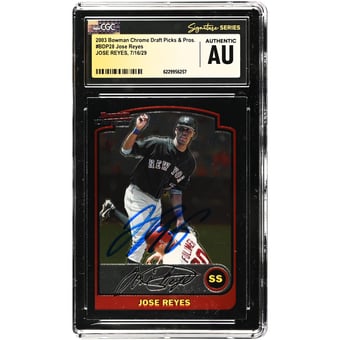 Best seller Jose Reyes New York Mets Autographed 2003 Bowman Chrome Draft Picks & Prospect #BDP28 CGC Fanatics Witnessed Authenticated Rookie Card
$125.99
$179.99Save $54.00Code WRAP: 25% off, or 30% off $50+ at checkout
Sold by Fanatics
Shop now -
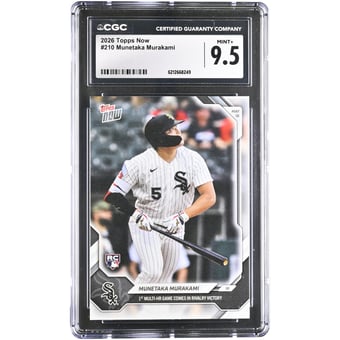 Best seller Munetaka Murakami Chicago White Sox 2026 Topps Now 1st Multi-HR Game Comes in Rivalry Victory #210 CGC Authenticated MINT+ 9.5 Rookie Card
$49.99
Code WRAP: 25% off, or 30% off $50+ at checkout
Sold by Fanatics
Shop now -
 Best seller Derek Jeter New York Yankees Autographed 1993 SP Foil #279 CGC Fanatics Witnessed Authenticated AUTH. ALT. Rookie Card
$2,449.99
$3,499.99Save $1,050.00Code WRAP: 25% off, or 30% off $50+ at checkout
Sold by Fanatics
Shop now
How grading works
Grading companies examine a card's corners, edges, surface and centering, give it a score from 1 to 10, and seal it in a tamper evident case with a serial number. PSA, Beckett (BGS) and SGC are the best known. A 10 is a card in essentially perfect condition.
The same card can sell for many times more in a 10 than in an 8. That is why you will see large price gaps between cards that look identical in photos.
Who makes the cards
Topps, now owned by Fanatics, has made baseball cards since the 1950s. Panini produced most licensed basketball and football cards for more than a decade, and those licences have been moving to Topps. Upper Deck holds the hockey licence. For a beginner the practical point is simple: stick to officially licensed cards that show team logos.
Five ways to start
- Buy one rookie card of your favorite current player. It is the classic first card.
- Buy a card of a legend you grew up watching. Many great players have affordable cards from the height of their careers.
- Try a relic card. Owning a piece of a game worn jersey for the price of a card is hard to beat. See our game used guide.
- Buy a graded card. You know exactly what condition you are getting, and it arrives protected.
- Build a team collection. One card of every star on your team is a satisfying, low cost goal.
Players collectors are chasing

Browse cards by sport
Shohei Ohtani cards
See more-
 Best seller Kazuma Okamoto & Shohei Ohtani 2026 Topps Now Orange Foil #443 #/25 CGC Authenticated MINT+ 9.5 Card
$149.99
Code WRAP: 25% off, or 30% off $50+ at checkout
Sold by Fanatics
Shop now -
Kazuma Okamoto & Shohei Ohtani 2026 Topps Now Orange Foil #443 #/25 CGC Authenticated MINT+ 9.5 Card
$149.99
Sold by SportsMemorabilia.com
Shop now -
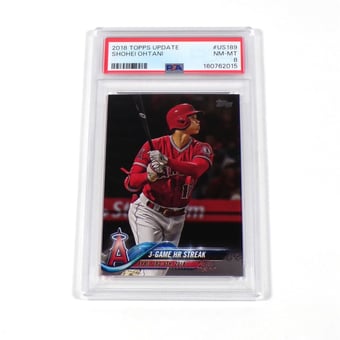 2018 Topps Update Shohei Ohtani Rookie #US189 Angels PSA 8
$147.99
$163.99Save $16.00Sold by Steiner Sports
Shop now -
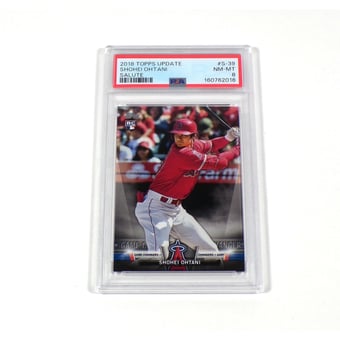 2018 Topps Update Shohei Ohtani Rookie Salute #S39 Angels PSA 8
$147.99
$163.99Save $16.00Sold by Steiner Sports
Shop now
Football rookie cards
See more-
 Best seller Kenyon Sadiq New York Jets 2026 Topps Now Gold Foil #6 #/50 CGC Authenticated 9 Rookie Card
$59.99
Code WRAP: 25% off, or 30% off $50+ at checkout
Sold by Fanatics
Shop now -
 Best seller Ricky Williams New Orleans Saints Autographed 1999 Bowman's Best #133 CGC Fanatics Witnessed Authenticated Rookie Card
$76.99
$109.99Save $33.00Code WRAP: 25% off, or 30% off $50+ at checkout
Sold by Fanatics
Shop now -
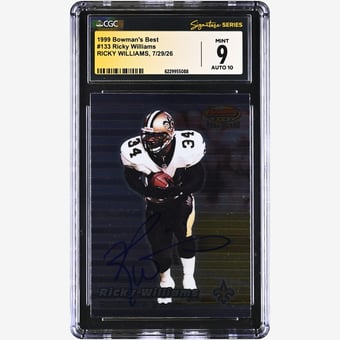 Best seller Ricky Williams New Orleans Saints Autographed 1999 Bowman's Best #133 CGC Fanatics Witnessed Authenticated 9/10 Rookie Card
$104.99
$149.99Save $45.00Code WRAP: 25% off, or 30% off $50+ at checkout
Sold by Fanatics
Shop now -
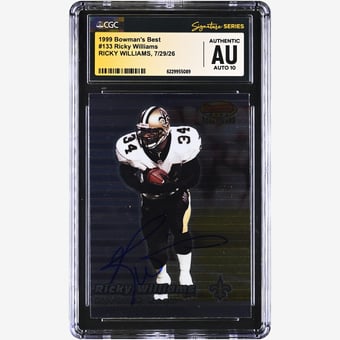 Best seller Ricky Williams New Orleans Saints Autographed 1999 Bowman's Best #133 CGC Fanatics Witnessed Authenticated AUTO 10 Rookie Card
$90.99
$129.99Save $39.00Code WRAP: 25% off, or 30% off $50+ at checkout
Sold by Fanatics
Shop now
Common beginner mistakes
- Buying for profit first. Card prices rise and fall with a player's form and with fashion. Buy what you enjoy owning. We are a shopping guide, not financial advisers.
- Ignoring condition. On raw cards, look closely at the corners and the centering in the photos.
- Handling cards with bare fingers. Put raw cards in a soft sleeve and then a rigid holder.
- Leaving cards in sunlight. Colors and autographs fade. See our care guide.
Card breaks and collection videos are a big part of the hobby. If you make them, you can start a free channel on WatchSports.com and set your own prices for paid content.
Common questions
What is a rookie card?
A player's first officially licensed trading card, often marked RC. It is usually the most collected card of that player.
What does PSA 10 mean?
PSA is a grading company. A 10 is its highest grade, for a card in essentially perfect condition. Graded cards are sealed in a hard case with a serial number.
What trading cards should a beginner buy?
Start with a rookie card of a player you like, or a graded card so you know its condition. Buy what you enjoy owning, not what you hope will rise in price.
Are sports cards a good investment?
Some rise in value and many do not. Prices move with a player's performance and with collecting trends. Treat cards as a hobby first.